Wondering how to sew a toddler dress without a zipper or a fitting headache? Start with a simple A-line dress in cotton: it’s flat-sewn, forgiving and takes an afternoon.
| Item | Value |
|---|---|
| Time for a simple A-line dress | 2 to 3 hours |
| Fabric for size 3T (44/45-inch wide) | 0.875 yd |
| Fabric for size 2T (44/45-inch wide) | 0.75 yd |
| Shoulder to hem, size 3T | 19 inches |
| Seam allowance in the guide’s pieces | 0.5 inch |
| Hem allowance in the guide’s pieces | 1 inch |
These figures come from a toddler clothing pattern guide. They can change and vary by pattern, so check the source and your own pattern before you rely on them.
This project is part of our wider guide on how to sew kids clothes.
Why an A-line dress suits a first toddler project
The guide describes its dress as a simple A-line with no zippers, buttonholes or fitted necklines. That avoids several potentially tricky steps for beginners.
It also uses flat construction: you finish the hems and casings while the fabric is still flat and close the seams last. The general steps below use a different order, finishing the hem after the side seams. Flat pieces are far easier to handle than a small tube of fabric under the presser foot.
Toddlers also grow fast, so a dress that takes a few hours rather than a weekend is easier to justify. If you’d like a smaller warm-up first, try how to sew a baby bib to practise straight seams and turning corners.
Choose the fabric and the size
For the dress, the guide recommends quilting cotton or cotton lawn, both lightweight to medium weight for drape and comfort. Both are woven, press crisply and are stable under the needle.
Check the measurements before cutting. The guide’s table includes standard ease, so compare it with your child:
- Size 2T: chest 21 inches, shoulder to hem 17 inches.
- Size 3T: chest 22 inches, shoulder to hem 19 inches.
- Size 4T: chest 23 inches, shoulder to hem 21 inches.
- Size 5T: chest 24 inches, shoulder to hem 23 inches.
Yardage for the dress is 0.75 yd for 2T, 0.875 yd for 3T, 1 yd for 4T and 1.125 yd for 5T, based on 44/45-inch-wide fabric. The guide suggests adding an extra 0.25 yard for test swatches and cutting errors.
On a budget? The guide calls repurposing an adult cotton shirt or thrift-store fabric a smart strategy for toddler projects.
What you need before you start
- Your chosen woven cotton, washed and pressed.
- A simple A-line dress pattern in your child’s size.
- Matching thread and a new universal needle.
- Pins or clips, fabric scissors and an iron.
- Optional: a fabric marker and a seam gauge for even hems.
Wash and dry the fabric the way you’ll launder the dress. Cotton can shrink, and it’s better for it to shrink before you cut.
How to sew a toddler dress, step by step
Pattern instructions vary, so treat these as the general order. In the guide, the pattern pieces include a 0.5-inch seam allowance and a 1-inch hem allowance unless noted.
- Cut. Lay out the pieces on the fold as marked, then cut one front and one back. Transfer any notches.
- Finish the raw edges. Zigzag or serge the edges of the shoulders and sides, since woven cotton frays.
- Finish the neckline and armholes. Do this while the pieces are still flat, following your pattern, whether that is facings or binding.
- Sew the shoulders. Place right sides together, stitch, and press the seam allowance open or to one side.
- Sew the sides. Pin from the underarm down to the hem and stitch in one pass, backstitching at each end.
- Hem. Press the hem up and stitch it. Try the dress against your child’s height before you commit to the length.
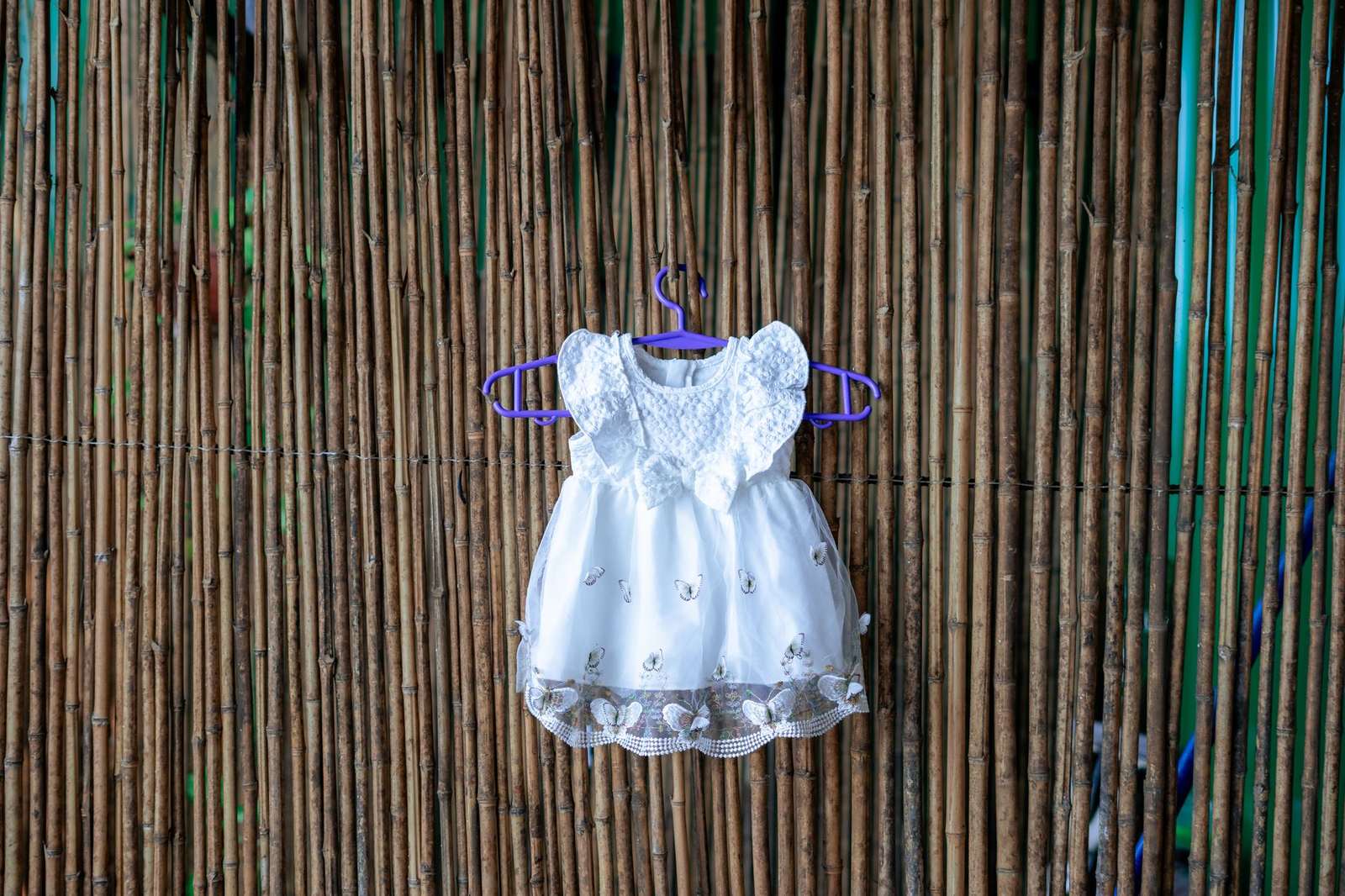
- Press. Give every seam a final press so the dress sits flat.
Sewing tips that save time and temper
Small habits make a toddler dress look neat rather than homemade. Most of them cost nothing.
- Press as you go. Pressing each seam before crossing it with another keeps the pieces flat and the corners crisp.
- Use a fresh needle. A dull needle snags cotton lawn and can pucker the seams.
- Test your stitch. Sew a few lines on a scrap of your dress fabric and adjust the stitch length before touching the real pieces.
- Backstitch at the ends. Backstitching helps prevent the ends of seams from unravelling.
- Pin or clip generously. Small pieces slide, and clips are gentler on lawn than pins.
If a seam goes wrong, unpick it straight away rather than stitching over it. Small mistakes may be quick to fix.
Think about how the dress will be worn too. Children climb, crawl and sit on floors, so a slightly longer hem and a roomy armhole give them freedom. Choose a print that hides little stains, and you will be glad of it by the second wash.
Make it comfortable and safe to wear
Check the inside of the dress by running a hand along every seam. Scratchy seams or stiff facings bother small children, so trim and press them flat.
Keep trims simple. Skip long ties, cords and loose decorations around the neck, and sew any buttons or appliqués on firmly and check regularly for loosening.
Once you’ve made a dress, how to sew a baby romper is a natural next project, as it uses many of the same skills.
Finally, wash the finished dress once before gifting it. After washing, inspect the dress for weak seams and loose threads.
Common mistakes to avoid
Careful setup can help prevent sewing problems.
- Skipping the test. Hold the pieces against your child or a dress that fits well before cutting the full length.
- Mixing allowances. Use the seam allowance your pattern states, and don’t swap it for another tutorial’s.
- Leaving edges raw. Frayed seams unravel in the wash, so finish them.
- Rushing the hem. Press first and pin it evenly.
Ways to customise the dress
Once the basic shape feels comfortable, small changes make each dress your own without adding much risk. Keep each change simple, and make only one at a time on a first attempt.
- Pick a bold print or a plain colour and add contrast bias binding at the neckline.
- Add patch pockets, stitched flat and topstitched close to the edge.
- Lengthen the hem a little so the dress lasts into the next season.
- Use a pretty thread colour for the hem stitching.
Place them low enough for small hands, and reinforce the top corners with a little extra stitching.
Choose additions with compatible care requirements, and prewash all fabrics before sewing.
Frequently asked questions
How long does it take to sew a toddler dress?
Show answer
The guide estimates 2 to 3 hours for its simple A-line dress. Allow longer if you are new to sewing or add details.
How much fabric do I need?
Show answer
For size 3T, the guide lists 0.875 yd of 44/45-inch-wide fabric, plus an extra 0.25 yard for test swatches and mistakes.
Which fabric is best for a first dress?
Show answer
The guide suggests quilting cotton or cotton lawn. A repurposed adult cotton shirt also works.
Do I need a zipper or buttonholes?
Show answer
Not for this style. The guide’s dress needs no zippers, buttonholes or fitted necklines.