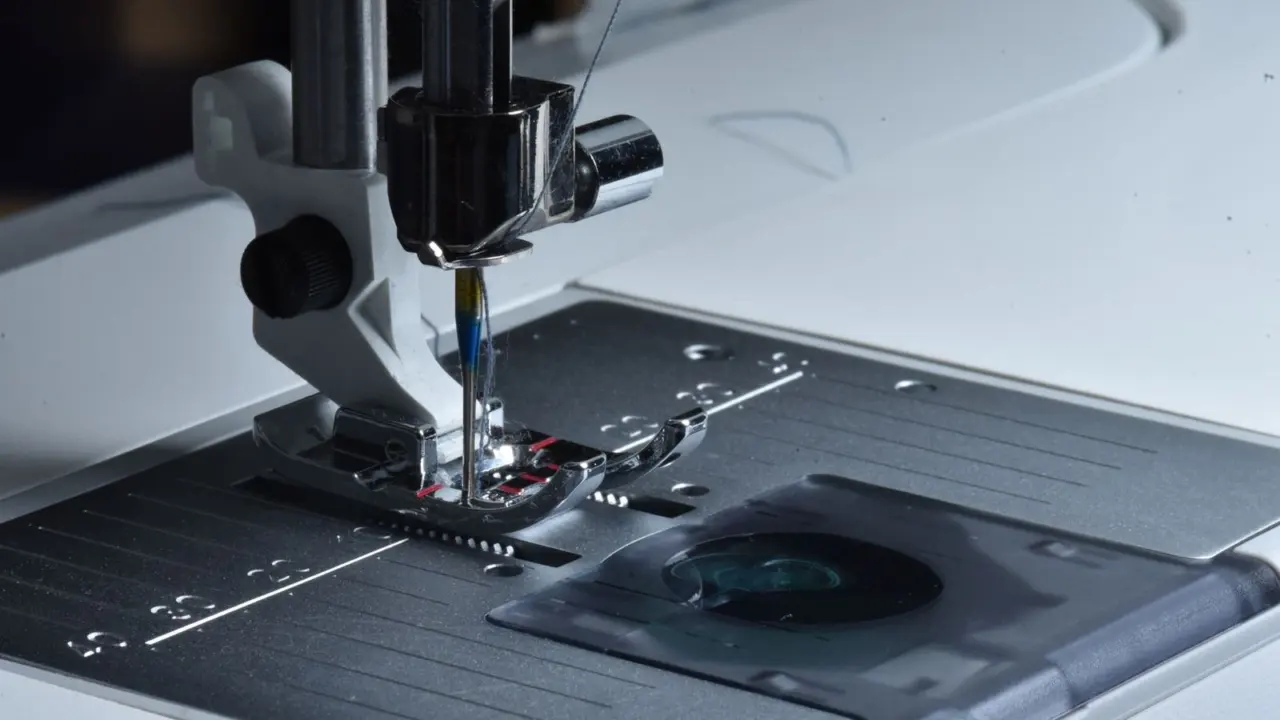
Staring at a wall of packets and unsure which of the types of sewing machine needles you need? Match the needle to your fabric: universal for most wovens, ballpoint for knits, sharp microtex for fine fabric, denim for thick layers.
New to all this? Start with our guide to sewing for beginners, then come back here when you are choosing a needle.
| Item | Key fact |
|---|---|
| Universal needle | General sewing of knit and woven fabrics |
| Jersey / ballpoint needle | Designed for knits and some stretch fabrics |
| Microtex / sharp needle | Sharp point for straight stitches on delicate and microfiber fabrics |
| Denim needle sizes | 70/10, 80/12, 90/14, 100/16, 110/18 |
| Metric size number | Needle diameter in hundredths of a millimeter |
The descriptions come from a needle maker’s primer and Wikipedia’s sewing machine needle entry. Product ranges can change, so check the source before you rely on them.
Why the needle matters more than you think
A needle does the hard work of pushing thread through cloth, so the wrong one shows up fast. You may see skipped stitches, puckered seams, snagged threads or a needle that snaps.
Two choices decide almost everything: the point and shape (the type) and the size (the thickness). Type depends on what the fabric is made of and how it is built. Size depends on how heavy the fabric is.
A new needle is also cheap insurance. A blunt or bent needle can cause the same problems as the wrong type, so swap it out when stitches start to look off.
The main types of sewing machine needles
Needle makers sort their ranges by job. The list below follows the descriptions in the SCHMETZ needle primer.
- Universal: for general sewing of knit and woven fabrics. This is the sensible starter needle.
- Jersey / ballpoint: designed for sewing on knits and some stretch fabrics.
- Stretch: designed for synthetic suede or elastic knitwear.
- Microtex / sharp: a sharp point for straight stitches on delicate and microfiber fabrics.
- Denim / jeans: a medium ball point and reinforced blade for denim and similar fabrics.
- Quilting: a special taper to the shaft and a slightly rounded point to prevent damage to material sewn in layers.
- Topstitch: extra sharp with an enlarged groove to accommodate large diameter threads and dense fabrics.
- Leather: designed for leather, artificial leather and heavy non-woven synthetic applications.
- Metallic: an enlarged polished eye that prevents shredding of specialty threads.
- Embroidery: designed for rayon and polyester embroidery applications.
Most beginners can start with just three: universal, ballpoint and a sharp or denim needle. Add the others when a project calls for them.
Which needle for which fabric?
Cotton, linen and other wovens
A universal needle is the everyday choice for quilting cotton, broadcloth and similar fabrics. It has a slightly rounded point and works on most household machines.
T-shirt jersey and other knits
Knits are loops of yarn, and a sharp point can cut them. A ballpoint needle is built for knits, so it is the first thing to try when stretch fabric skips stitches. For very stretchy cloth, a stretch needle is the next step.
Silk, microfiber and fine fabric
A microtex needle has a sharp point that pierces tightly woven or delicate cloth cleanly. It suits straight stitching, which is why it is popular for fine wovens and microfiber.
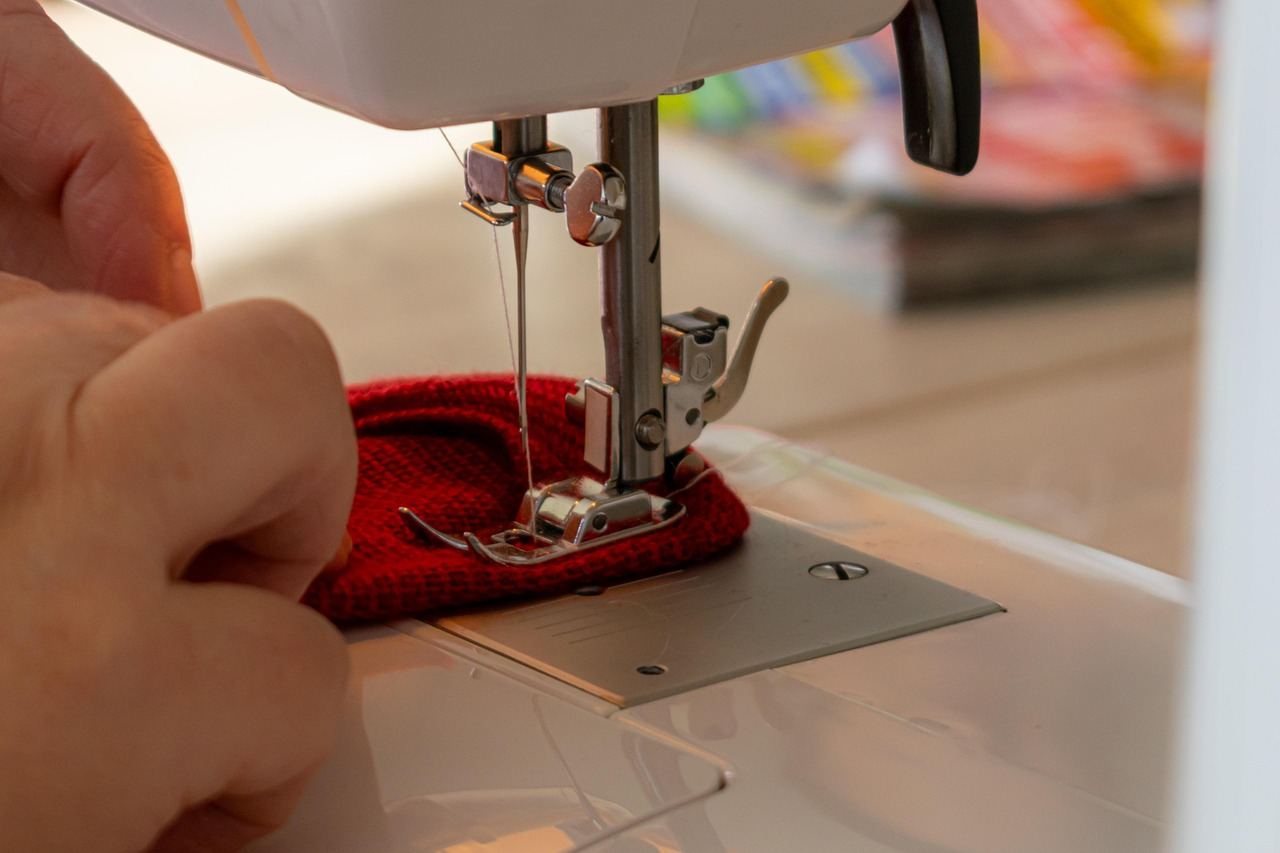
Denim, canvas and thick layers
A denim needle has a reinforced blade for penetrating extra thick woven fabrics with minimum needle deflection. That means less bending, fewer skipped stitches and less risk of breakage. For heavy topstitching thread, a topstitch needle gives the thread room in its enlarged groove.
Understanding needle sizes
Needle packets show two numbers separated by a slash. According to Wikipedia, the metric designation is the actual needle diameter in hundredths of a millimeter, and the other number is the older American size.
Two systems remain in common use: the American and the international (metric) one, and packets commonly show both. A higher number means a thicker needle.
In the same source’s chart, the finest size, 60 metric, is matched with very fine fabrics such as silk, chiffon, organza, voile and lace.
Denim needles come in a spread of sizes, from fine to heavy, as the table above shows. As a rule, pick a thinner needle for lightweight cloth and a thicker one for heavy cloth. Using a thick needle on delicate fabric leaves visible holes, while a thin one on heavy fabric can bend or break.
Common needle problems and what to try
A needle mismatch can cause problems that resemble a machine fault. Work through the list below before you touch the tension dial.
- Skipped stitches on stretch fabric: switch from a universal needle to a ballpoint, then to a stretch needle if the cloth is very elastic.
- Shredding or breaking thread: the eye may be too small for the thread. Try a topstitch needle for thick thread or a metallic needle for specialty thread.
- Visible holes or puckering on fine cloth: the needle is probably too thick or blunt. Fit a fresh microtex needle in a finer size.
- Bent or snapped needles on thick fabric: a denim needle with a reinforced blade is built to resist deflection.
- Layers that get damaged: a quilting needle with a tapered shaft and slightly rounded point is made for material sewn in layers.
Keep a few spare needles in your sewing kit, and store used ones safely. Writing the type and size on a small card or the packet helps, because needles look nearly identical once they are out of the pack.
It also helps to think about the whole project before you start. A tote bag made of canvas with a cotton lining may need a denim needle for the outside and a universal needle for the lining. Changing needles between steps can help avoid unpicking.
Quick tips for choosing and using needles
- Choose the type by fabric structure: woven, knit, leather or layered.
- Choose the size by fabric weight: lighter cloth, finer needle.
- Match your thread. A topstitch needle can accommodate thick thread, and a larger polished eye can help reduce shredding of metallic thread.
- Sew a test seam on a scrap of your actual fabric before starting.
- Replace the needle when it is bent, blunt or when stitches turn uneven.
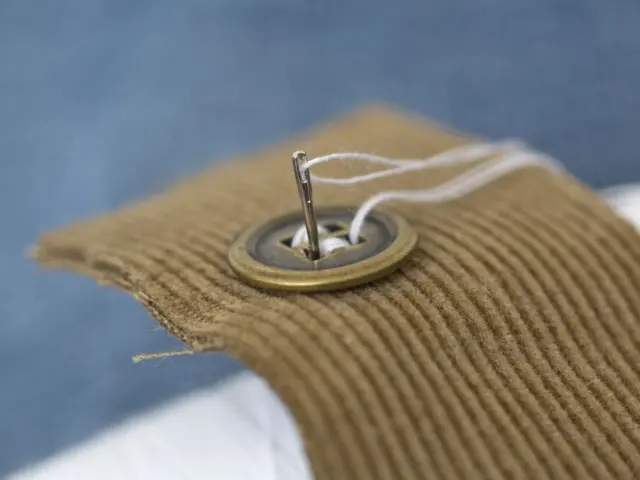
Once the needle is right, practise your stitching with how to sew a straight line. A good needle also makes hand-finishing jobs easier, for example when you learn how to sew on a button on a project you have just made.
If your machine has a flat-backed needle shank, check the flat side faces the right way. Wikipedia notes the flat face on a universal needle’s shank helps ensure the needle is inserted correctly.
Frequently asked questions
Can I use a universal needle for everything?
Show answer
It handles many projects, since it is made for general sewing of knit and woven fabrics. Stretchy knits, leather and thick denim still work better with a purpose-made needle.
What does 80/12 mean?
Show answer
It pairs the metric size with the American size. The metric number is the needle diameter in hundredths of a millimeter, so a higher number is a thicker needle.
Why does my knit fabric skip stitches?
Show answer
A sharp needle may be catching the yarn loops. Try a ballpoint needle, and a stretch needle if the fabric is very elastic.
How do I know when to change my needle?
Show answer
Change it when stitches skip or look uneven, when you hear a thumping sound through the fabric, or when the needle is bent. Many sewers also start each new project with a fresh needle matched to that fabric, since a needle that has been through heavy denim may no longer suit fine silk.
Are all needles made for every machine?
Show answer
Wikipedia says a universal class needle is designed to be used on virtually any domestic sewing machine. Check your machine manual if you use an unusual system.