Want to know how to make a fabric basket that actually stands up? Cut four fabric pieces, fuse heavy interfacing to the outer pair, sew, box the corners and add a lining.
This project is one of many in our easy diy sewing projects collection.
| Item | Value |
|---|---|
| Fabric pieces | 4 squares: 2 outside, 2 lining |
| Interfacing | 2 pieces of heavy fusible |
| Seam allowance | 1/2 inch (12mm) |
| Lining gap for turning | 2 inch (5cm) |
| Outer fabric weight | Medium weight |
Figures come from one tutorial and can change: check the Treasurie fabric basket tutorial before you rely on them.
What you need to make a fabric basket
The basket is built from four pieces: two for the outside and two for the lining. The tutorial suggests a medium weight fabric such as cotton decorator fabric for the outside, and quilting cotton for the lining.
You also need two pieces of heavy fusible interfacing cut to match the outer pieces. For larger baskets, the same tutorial says extra heavy interfacing is needed to keep the shape.
- Outer fabric, 2 pieces
- Lining fabric, 2 pieces
- Heavy fusible interfacing, 2 pieces
- Thread that matches the outer fabric
- Pins or clips, an iron and a sewing machine
- Scissors or a rotary cutter, a ruler and a fabric marker
Wash and press your fabrics before cutting. Cotton can shrink, which may cause puckering around the interfacing after washing.
Choosing fabric and interfacing
A basket lives or dies on its body. Medium weight fabrics hold a crisp shape and take interfacing well, while thin cotton tends to wrinkle and slump unless it is backed with something sturdier.
Pick a print you will enjoy looking at, since the basket will sit out on a shelf or floor. Busy prints hide small sewing wobbles, and plain colours show every one.
Think about the finished use before you buy. A basket for yarn or toys can take a lighter lining, while one that holds books or tins deserves the heavier interfacing and a firmer outer fabric.
A quick note on interfacing
Fusible interfacing has a glue side that melts when heated. Follow the maker’s instructions for heat, time and pressing-cloth use, and keep the adhesive side away from the iron.
Sewing the outer basket
Start by pressing the fusible interfacing to the wrong side of the outer pieces, following the interfacing maker’s instructions. This is what gives the basket its body.
The pattern uses a 1/2 inch (12mm) seam allowance, already included in its cutting sizes. If you change the allowance, adjust your cutting sizes to match.
- Place the outer pieces right sides together.
- Sew the side and bottom seams, leaving the top open.
- Press the seams open.
Use a slightly longer stitch than usual, since you are sewing through fabric and interfacing together. Backstitch at the start and end of every seam so the corners hold up to loads.
Clip or pin generously at the corners where the side and bottom seams meet. Those spots take the most strain once the basket is full.
How do you box the corners?
Boxing the corners gives the basket its flat base and depth. Press the seams open, then match the bottom seam to the side seam so each bottom corner forms a point.
Sew straight across each point, then repeat for the lining. A deeper box makes a deeper, narrower basket, so test on scrap fabric first.
Make sure the seams are pressed open and lined up before you stitch. Misaligned seams can make the base uneven.
- Mark the stitching line with a fabric marker and ruler so both corners match.
- Sew across the line, then reinforce it with a second row of stitches.
- Keep the outer and lining boxes the same size so the lining fits inside.
Adding the lining and finishing
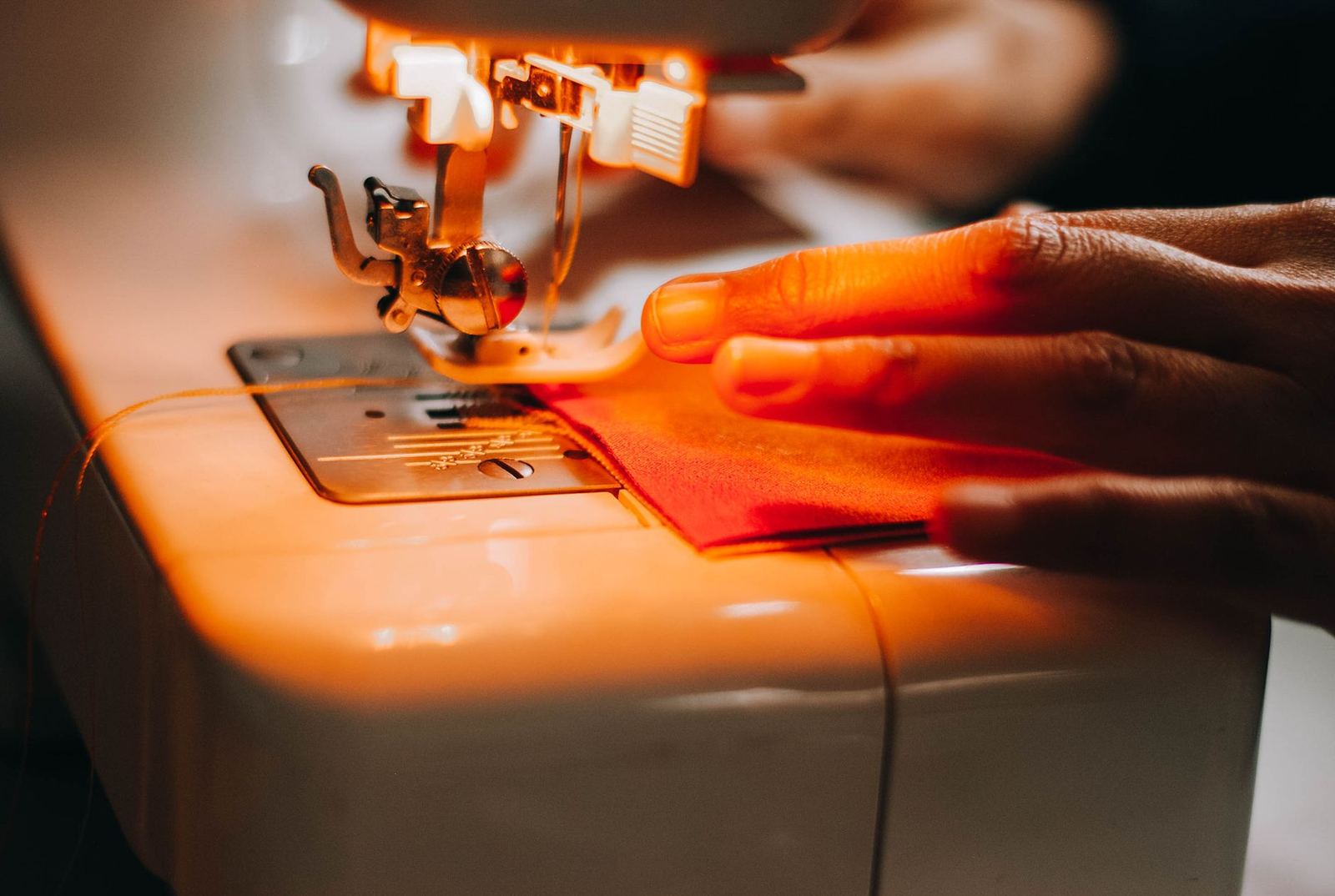
Sew the lining the same way, but leave a 2 inch (5cm) gap on one side. You will turn the whole basket through this opening.
- Slip the outer basket inside the lining, right sides together.
- Sew around the top edge.
- Turn the basket right side out through the gap.
- Close the gap by hand or with a close edgestitch.
- Press the top edge neatly and fold it down to finish.
Push the lining down into the basket and roll the seam to the edge with your fingers before pressing. A neat, flat top edge is what makes a handmade basket look finished.
If the folded edge keeps flopping, topstitch around the rim. That also holds the lining in place and stops it creeping up when you pull things out.
Cutting and preparing your pieces
Accurate cutting saves trouble later. Use a ruler and rotary cutter or sharp scissors, and cut the outer, lining and interfacing pieces to the same size.
Lay each piece flat on a mat and check that the grain runs straight. Fabric cut off grain can twist after sewing, which makes the finished basket lean.
Label the pieces with a scrap of tape if your outer and lining fabrics look alike. Mixing them up after interfacing is a mistake that is hard to undo.
Press the fabric flat before you fuse. Creases pressed under interfacing can be difficult to remove, so smooth them out first.
Fixing common problems
Most basket troubles come from a few causes. Check this list before you unpick anything.
- Basket will not stand: The interfacing may be too light for the size. Use heavy, or extra heavy for a large basket.
- Lining is too big or bulges: the lining dimensions or seam allowances may not match the outer basket. Match the box size on both.
- Bulky seams at the corners: trim the extra fabric from the boxed corners and press the seams open.
- Puckered stitching: use a longer stitch, and do not pull the fabric as it feeds through the machine.
- Gap will not close neatly: press the edges inward first, then use a ladder stitch or close edgestitch.
Ideas and what to sew next
Once you have one basket done, they are quick to repeat. Sew a set in matching fabric for a shelf, or one in a bold print as a gift filled with something useful.
You can add fabric handles or a contrast band at the top fold for a more personal look. Keep any additions light so the basket stays steady when you pick it up.
Boxed corners and lining are skills you will reuse. Try how to sew a drawstring bag or how to make a pillow cover next to practise straight seams and neat finishing.
Frequently asked questions
What fabric is best for a basket?
Show answer
Medium weight cotton, such as decorator fabric, works well outside. Quilting cotton suits the lining.
Why does my basket flop?
Show answer
The interfacing is probably too light. Heavy fusible interfacing helps, and larger baskets need extra heavy.
Can I change the size?
Show answer
Yes. Cut squares to a different size, keeping the same seam allowance on every piece, and box the corners to suit.
Can I wash a fabric basket?
Show answer
Spot clean it where you can. Fusible interfacing can bubble with heavy washing, so check the interfacing maker’s care advice first.