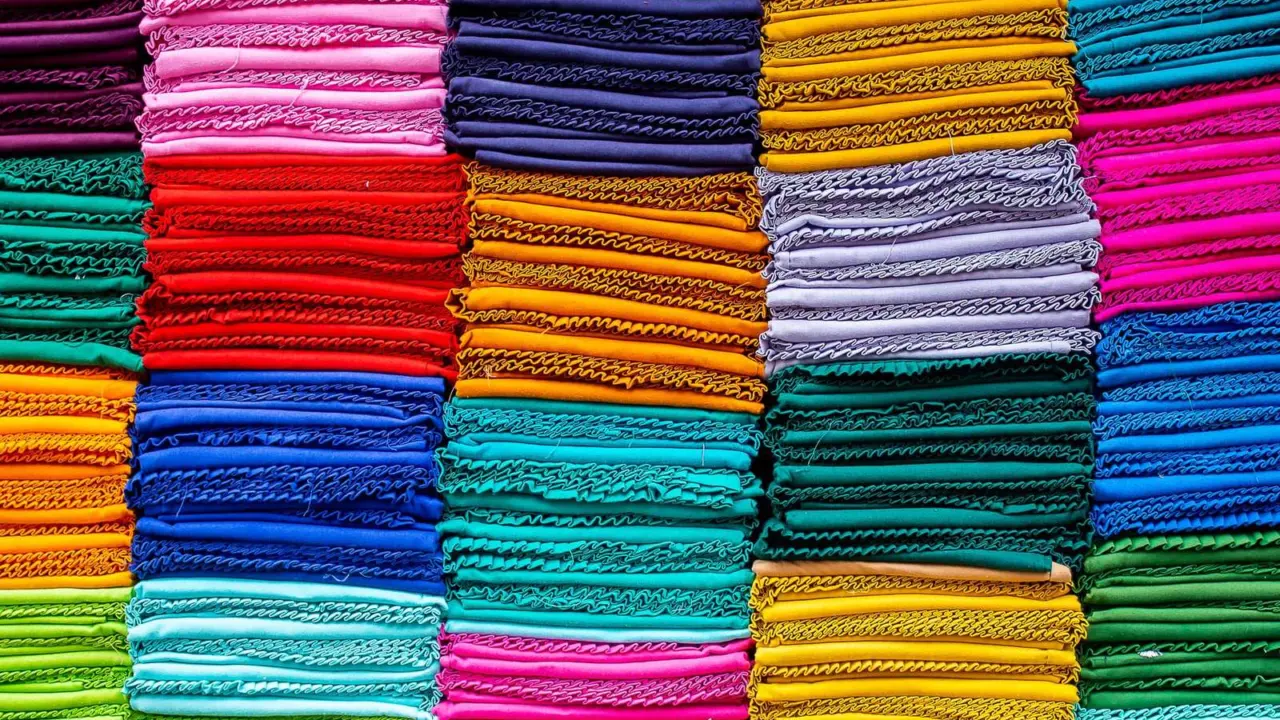
Standing in the fabric aisle, unsure what to buy? The best fabric for kids clothes is usually soft cotton jersey for everyday knits and a tight cotton poplin for woven pieces, washed before cutting.
This guide sits alongside our overview of how to sew kids clothes.
| Item | Value |
|---|---|
| Jersey sample with elastane | 95% cotton / 5% elastane |
| Jersey sample weight | 200 g/m2 |
| French terry sample weight | 250 g/m2 |
| Fabric type for T-shirts and leggings | Soft, stretchy knit |
| Fabric type for gathered skirts and dresses | Poplin |
The figures above come from a fabric retailer’s guide to children’s fabrics. Product specifications change, so check the source before you rely on them.
What kids clothes need from a fabric
Children’s clothes get washed often and worn hard. One retailer’s guide says “Children’s garments must withstand frequent washing, allow freedom of movement, and remain comfortable throughout active days.”
Skin matters too. The same guide notes that “Materials that are rough, stiff, or poorly breathable can cause irritation and discomfort.”
So judge every fabric on four things:
- Softness against the skin, with no scratchy finish or stiff coating.
- Breathability, to help heat and moisture escape.
- Stretch or ease for climbing, running and crouching.
- Easy care, because nobody wants to iron or hand wash a playground outfit.
A fabric that scores well on all four is rare, so decide which matters most for the garment. A party dress can lean on looks, but a school tee must survive the wash.
Knits: the comfortable default
For anything close to the body, start with a knit. The Nooteboom guide puts it simply: “T-shirts and leggings need softness and stretch, while trousers require more strength and shape retention.”
Cotton jersey is the classic choice for tees, leggings and simple dresses. A little elastane helps too, since “Elastane may be added to improve stretch recovery and help fitted garments retain their shape.”
French terry is the step up for warmth. It is “a knitted fabric with a smooth outer surface and visible loops on the inside,” which makes it a good fit for sweatshirts and joggers.
Reading a fabric listing
Look at fibre content and weight. A listing such as 95% cotton / 5% elastane at 200 g/m2 describes a lighter jersey, while a French terry listed at 250 g/m2 is heavier and warmer.
Heavier is not always better. Pick the weight that suits the season and the garment, and hold the fabric against your wrist or neck before you buy.
Sewing tips for knits
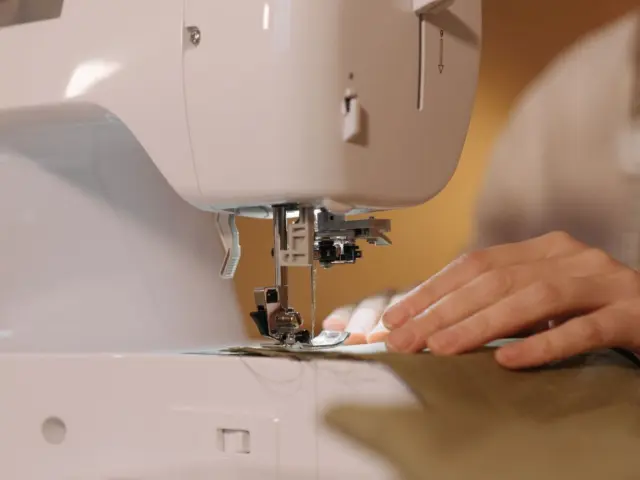
- Use a ballpoint or stretch needle so the fabric is not cut or snagged.
- Choose a stretch stitch or a narrow zigzag for seams that must give.
- Stabilise shoulder seams with a strip of tape so they do not wave out.
- Let the fabric feed freely rather than pulling it, which causes wavy hems.
Wovens: for shape and structure
A woven holds its form better than a knit. Nooteboom’s guide notes that “A knitted cotton jersey behaves very differently from a woven cotton poplin, even though both may contain the same fibre.”
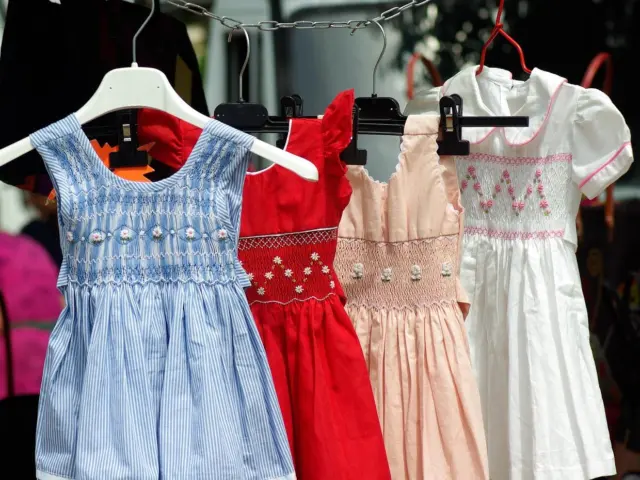
Poplin is “suitable for shirts, gathered skirts and dresses that need a clean shape.” If you are planning one, our walkthrough on how to sew a kids skirt pairs well with a crisp poplin.
The same guide also lists muslin, corduroy and stretch denim. Use corduroy or stretch denim where trousers need extra strength, and muslin where you want a light, airy layer.
How to pick by garment
- T-shirts and leggings: cotton jersey, ideally with a little elastane.
- Sweatshirts and joggers: French terry.
- Shirts, gathered skirts, dresses: cotton poplin.
- Trousers: corduroy or stretch denim for strength and shape.
- Pyjamas: a soft, breathable cotton knit, cut to your local sleepwear rules.
On sleepwear, the Pound A Metre guide adds that “Breathable materials reduce the risk of overheating, particularly for sleepwear.” Rules on sleepwear fit and flammability differ by country, so check your local safety authority before you sew pyjamas.
Also think about who will wear the garment next. A knit with some stretch can be passed on to a younger sibling more easily than a closely fitted woven.
Matching fabric to the child
Every child is different, and the right fabric depends on the wearer as much as the garment. A child who hates tags and seams will want the softest knit you can find.
A child who lives outdoors needs something tougher at the knees and elbows. For them, consider fabrics designed to withstand abrasion at the knees and elbows; weight alone does not establish durability.
Babies and toddlers
Choose gentle, breathable fabrics and keep seams flat. Soft jersey and muslin are comfortable choices, and plain, undyed or lightly printed cloth keeps things simple.
Toddlers also grow quickly, so a forgiving stretch knit is often a better use of your time than a fitted woven that will be outgrown in a few months.
School-age children
Older children want clothes that survive playground wear and frequent washing. Terry, corduroy and stretch denim suit trousers and layers, while jersey covers tees and leggings.
Let them choose the print or colour where you can. Letting children choose may help you find clothes they want to wear.
Mixing fabrics in one garment
Combining fabrics can give you the best of both. A poplin skirt over a jersey top, or a terry hoodie with a jersey lining at the hood, balances structure and comfort.
Keep the care needs of the pieces compatible. If one part needs a cool wash and another needs a hot one, the garment will not stay easy to care for.
Before you cut: prep and fit
Wash and dry the fabric the way you will wash the finished garment. Cotton can shrink, and a skipped pre-wash is a common reason a new tee comes out too short.
Fabric choice also interacts with fit. Stretch knits can provide some flexibility in fit, but both knits and wovens need accurate measurements and appropriate growing room, so read up on kids sewing pattern sizing before you buy yardage.
Finally, choose easy care. As the Pound A Metre guide says, “Materials that can be machine-washed and tumble-dried without special treatment save time and maintain garment appearance.”
A quick checklist before you head to the till:
- Match the fabric type to the garment.
- Check the fibre content and weight on the label.
- Feel it against your skin for scratchiness.
- Buy a little extra to allow for shrinkage and pattern matching.
- Pre-wash before cutting.
Frequently asked questions
What is the softest fabric for kids clothes?
Show answer
Cotton jersey and French terry are soft knits with a gentle surface. The Nooteboom guide says the knitted structure’s “soft surface feels comfortable against the skin.”
Is knit or woven better for kids?
Show answer
Knit suits active, close-fitting pieces such as tees and leggings. Woven fabrics such as poplin suit shirts, gathered skirts and dresses that need a clean shape.
Should I add elastane?
Show answer
A small amount can help. Elastane improves stretch recovery so fitted garments keep their shape.
Is cotton good for sleepwear?
Show answer
Breathable fabrics help avoid overheating at night. Sleepwear safety rules vary by country, so check your local rules before sewing pyjamas.